
Events
Tête-à-Tech: Organizing the Un-Organizable: How Modern Tech Reshapes Artistic Legacy
Noah Landow sits down with Francine Snyder, Director of Archives at the Robert Rauschenberg Foundation, on original order, dyslexic wordplay, and AI without losing human judgment.
August 13, 2026
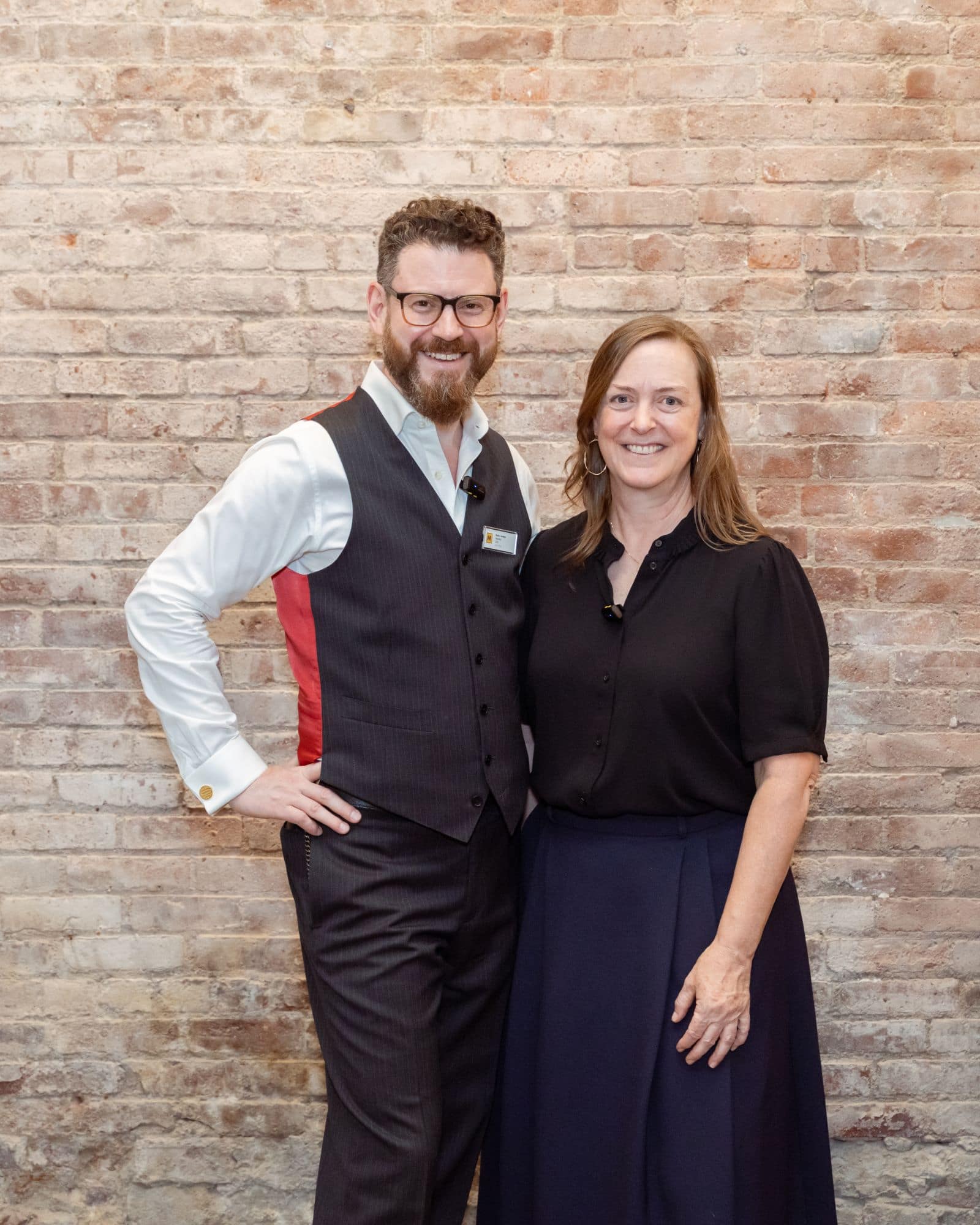
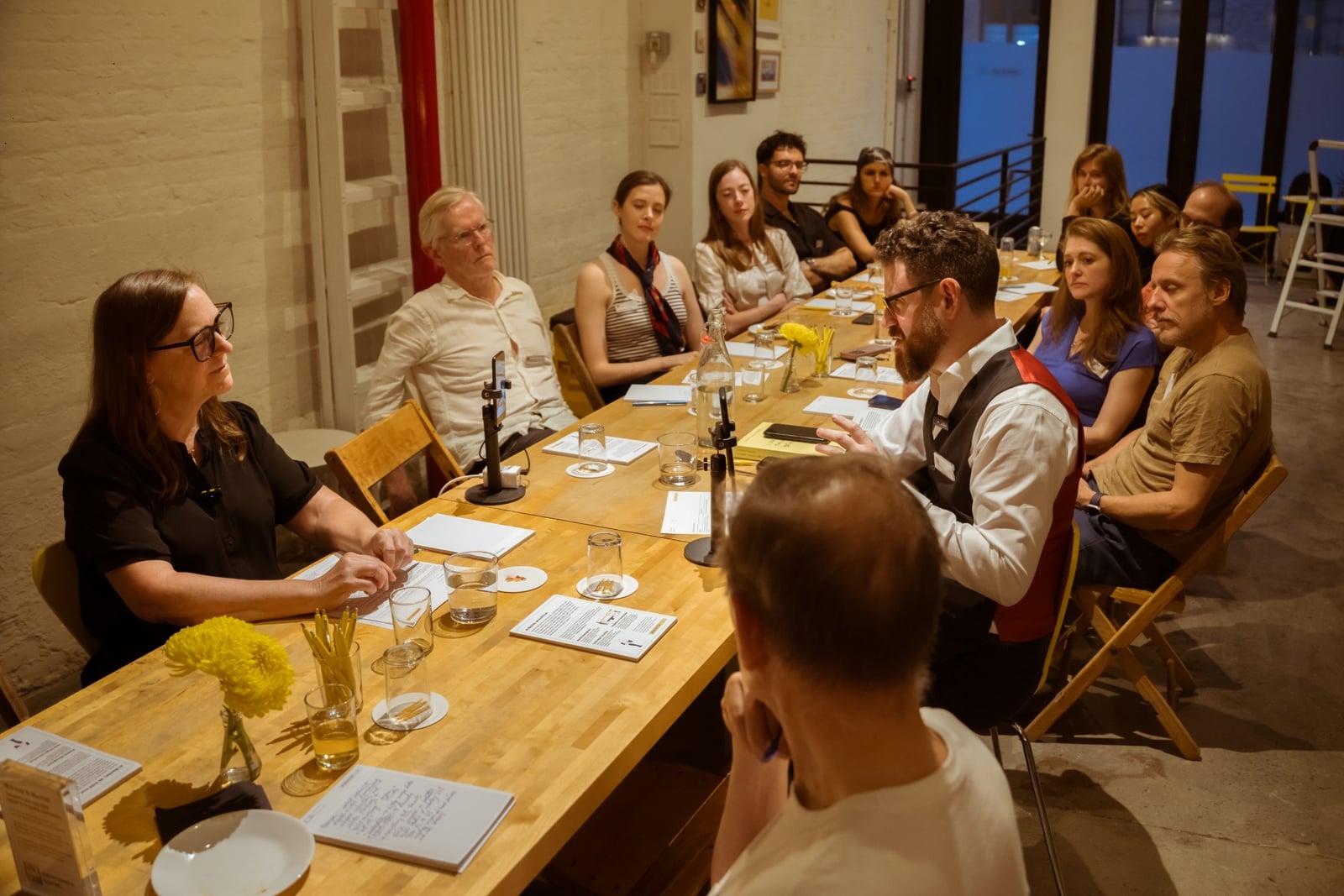
Photos by Alan Ai
Each artist’s archive is as unique as the artist himself or herself, and they carry the DNA of the artist…
When Robert Rauschenberg’s estate closed, his physical legacy didn’t arrive at the archive neatly sorted in cataloged files. Instead, it showed up at a New York warehouse shrink-wrapped across a dozen heavy industrial pallets.
The delivery contained a chaotic, brilliant cross-section of an artist’s entire life. Alongside traditional files and correspondence were filing cabinets shipped whole, banker’s boxes, rolls of studio fabric, obsolete hard drives, piles of crushed metal, travel souvenirs, and an unlabelled bedside alarm clock.
On Thursday, August 13, 2026, Noah Landow sat down with Francine Snyder, Director of Archives at the Robert Rauschenberg Foundation and editor of I Don’t Think About Being Great: Selected Writings by Robert Rauschenberg, for an informal discussion on how modern technology, archival theory, and human judgment intersect to preserve complex cultural legacies.
Preserving the DNA and Original Order of an Archive
Unlike traditional library collections, an artist’s archive encompasses far more than just paper documents; it preserves their physical environment, creative habits, and personal quirks. Because Rauschenberg famously incorporated everyday items into his artwork, distinguishing between a personal household item and source material for a Combine requires deep investigation.
When confronted with pallets of mixed media, the immediate urge might be to open boxes and sort through the most famous items. However, professional archivists adhere strictly to the principle of original order, maintaining records in the structure set by the creator because relative placement provides essential context.
This methodology extends to digital artifacts as well. When loose hard drives were found alongside studio materials, archivists imaged them carefully to determine whether their contents represented unique born-digital work or redundant backups before moving or organizing the files.
Navigating Dyslexia, Intentional Wordplay, and Dual Transcriptions
Rauschenberg identified as dyslexic, but his relationship with language was deeply creative and deliberate. He regularly employed phonetic spellings, puns, poetic syntax, and visual wordplay. In fact, his staff was famously instructed never to correct his spelling errors before sending out text.
This poses a significant technical challenge for standard database architecture, which relies on exact text strings. If an artist spells a term differently every time, conventional search queries fail.
To overcome this, the foundation utilizes a dual-transcription strategy within their systems. The public-facing official transcript preserves every original strikethrough, misspelling, and formatting quirk exactly as written, honoring the artist’s creative intent. Meanwhile, a corrected search transcript operates on the backend, enabling standard search algorithms and fuzzy matching to index the document effectively so researchers can actually find it.
A striking example of this deliberate wordplay appears in a 1966 manuscript about architect Frederick Kiesler. While publisher edits originally corrected Rauschenberg’s phrasing to “human being,” his original handwritten draft rendered the term as B-E-E-I-N-G, a direct play on the word “bee” in a text discussing honey.
The word bee is a being, and he was talking about honey! I thought it was really interesting that they corrected it in the published version, and that’s something that we chose to put back into the official transcript.
Shedding Paper-Era Habits for Modern Metadata
For generations, library and archival practices were constrained by the physical real estate of a 3x5-inch index card catalog. Today, despite having virtually infinite digital storage, archivists are still actively unlearning habits inherited from that paper era, such as relying on dated shorthand like “CA” instead of spelling out “circa”.
While digital databases allow for unlimited keywords, search terms, and relational cross-references, the primary bottleneck in processing archives has shifted. Digitizing a physical document or photo takes seconds; creating rich metadata, verifying context, and accurately cataloging the item still requires extensive human labor.
AI as an “Army of Interns”
The integration of Artificial Intelligence into archival workflows offers valuable support, provided it operates under strict human supervision. The Rauschenberg Foundation utilizes specialized AI tools to handle high-volume data tasks, such as facial recognition in crowded event photography or automated entity extraction across long oral history transcripts.
However, machine learning tools carry inherent biases and require constant verification. AI models can hallucinate incorrect historical connections or assign misleading keywords to sensitive subjects.
How Digital Access Enhances Physical Engagement
A long-standing concern among cultural institutions was that making collections freely available online might discourage researchers from visiting physical archives. In practice, open digital access achieves the exact opposite: it functions as a powerful discovery engine that increases physical visits.
When you digitize something, there’s a fear that people wouldn’t want to come in and see the original. It actually makes people come see the original more. Being able to discover what’s next to it, what’s around it. You have this feeling of it, the smell, the texture, those things you can’t get through the digital.
Digital repositories allow scholars to identify relevant items faster, but the physical artifacts retain unique sensory and contextual qualities that digital scans cannot replicate. Digital visibility ultimately deepens engagement with the physical collection.